Traditional Marketing vs Digital Marketing: A Smart Comparison
Published: 18 Nov 2025
Many small business owners spend money without seeing good results. They switch between old methods and online ads but still feel lost. Traditional Marketing vs Digital Marketing becomes a tough choice when budgets are tight. This struggle makes it hard to decide where to invest for steady growth.
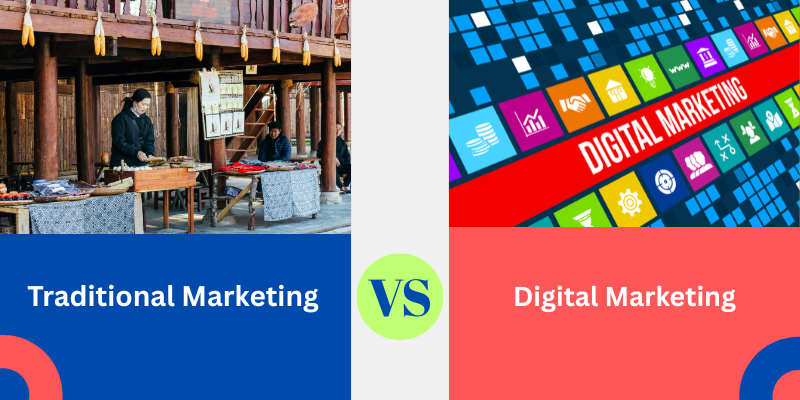
Digital Marketing vs Traditional Marketing
Here are some important traditional vs. digital differences given below.
| Statement |
|---|
|
Definition Communication Channels Audience Targeting Market Research Brand Awareness Marketing Strategy Marketing Campaign Communication Strategy Advertising Platform Market Segmentation Marketing Mix Marketing Efficiency Marketing Performance Marketing Goals Audience Analysis Brand Positioning Business Growth Content Format Cost Efficiency Reach and Accessibility Speed and Adaptability Interactivity and Engagement Customer Feedback Loop Longevity and Shelf Life Flexibility and Adaptability Local vs Global Reach Trust and Credibility Conversion Tracking Results Measurement Marketing Evolution Consumer Behavior Advertising Cost Communication Flow Target Market Campaign Duration |
| Traditional Marketing |
|---|
|
Uses offline methods like print, TV, radio, and billboards to reach people. Relies on physical communication channels such as newspapers, magazines, and outdoor ads. Mostly one-way communication with limited customer feedback. Based on surveys, focus groups, and general market trends. Builds brand recognition through repeated offline exposure. Follows long-term campaigns with fixed content and slower updates. Requires more time and money to plan and execute. Communicates through static messages and visuals. Depends on print ads, radio, and TV commercials Broad segmentation, focusing on location or age group. Focuses on the traditional 4Ps: Product, Price, Place, and Promotion. Hard to measure results accurately. Performance evaluation takes time and relies on feedback. Aims to increase local reach and brand recognition. Based on offline surveys and limited data. Established through reputation and long-term visibility. Supports growth gradually over time. Static: posters, flyers, and brochures. Generally expensive due to production and placement costs. Limited to a specific location or audience. Campaigns take longer to design and adjust. Minimal interaction after ad release. Collect feedback slowly through offline methods. Ads can last longer but lose freshness quickly. Less flexible; changes require reprinting or re-airing. Strong in local markets. Trusted more due to its long history. Difficult to track real conversions. Measured after the campaign ends. Evolved over decades but changes slowly. Based on general assumptions and offline trends High cost for TV and print placements. One-way: business to consumer. Broad and less specific. Fixed time period. |
| Digital Marketing |
|---|
|
Uses online platforms like social media, websites, email, and search engines to connect with audiences. Works through digital communication channels like social media, blogs, and online ads. Encourages two-way interaction through comments, shares, and direct messages. Uses digital analytics, audience insights, and online behavior tracking. Builds brand awareness quickly using viral campaigns and online reach. Adapts marketing strategy fast with real-time performance data. Easier to launch, adjust, and measure in real time. Uses interactive content like videos, polls, and stories. Uses platforms like Google Ads, Facebook Ads, and email marketing. Detailed segmentation using demographics, behavior, and interests. Expands the marketing mix with personalization and digital experience. Highly measurable with tools that track clicks, reach, and conversions. Performance is tracked instantly with analytics dashboards. Aims to increase traffic, conversions, and online visibility. Based on real-time data and self-generated analytics tools. Built through digital storytelling and online branding. Drives faster business growth through global reach and automation. Dynamic: videos, blogs, and social media posts. More cost-effective with flexible budgets and targeted ads. Global reach with 24/7 accessibility. Campaigns can be modified instantly based on feedback. High interactivity through comments, likes, and shares. Instant feedback via social media, reviews, and surveys. Content can be updated anytime and reused across platforms. Very flexible; content can be changed instantly. Strong in both local and global markets. Gaining trust through transparency and online reviews. Easy to track conversions and user actions online. Measured continuously through analytics tools. Rapidly evolving with new technologies. Based on real-time user data and analytics. Low-cost options are available for startups and small businesses. Two-way: business and consumer both communicate. Narrow and highly specific. Can run indefinitely or be paused anytime. |
What is Digital Marketing
Digital marketing promotes a business on the internet. It uses online ads, social media, and video channels. It helps bring more visitors to a website. It also builds strong engagement with people. Brands use simple tools like mobile marketing, influencer marketing, SEO, and email campaigns to guide users toward easy actions. When these tools work together, the whole process feels smooth and supports the digital growth of the business.
What is Traditional Marketing
Traditional marketing uses offline advertising methods to reach people. It relies on print media, broadcasting, newspaper ads, flyers, and posters to share a message. Brands also use billboard advertising, radio advertising, and television advertising to improve audience reach. Each medium helps with clear message delivery in a simple way.
This type of marketing works well for areas that need strong local reach. People see or hear the message through a familiar communication medium. It builds trust because the content appears in places people use every day. This makes the whole process feel direct and easy to follow.
Key Takeaways
Both marketing methods aim to connect with people but in very different ways. Here’s what you should remember.
- Traditional marketing focuses on physical ads and real-world interaction.
- Digital marketing thrives on technology and online communication.
- The choice depends on your audience, goals, and budget.
- Digital offers more flexibility and detailed tracking.
Traditional still holds power in building trust and local reach.
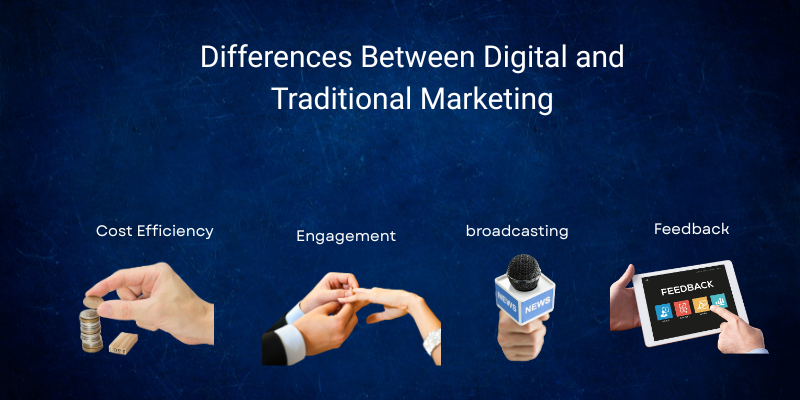
Key Differences Between Digital and Traditional Marketing
The real difference between traditional vs digital marketing lies in how they reach and engage people. Here’s how they stand apart.
Medium of Communication
A medium of communication is the way a message reaches people. It can be broadcasting, print media, or social media. Many brands also use online channels like websites and apps. Each option helps with message clarity and smooth visual communication. The goal is to send a message in a simple and clear way.
- Used for sharing messages with many people
- Works through print, online, and social platforms
- Helps keep messages clear and easy to understand
Cost Efficiency
Cost efficiency means using money in a smart way. It helps with better budgeting and smooth resource allocation. People evaluate costs through simple cost comparison to see what works best. Good planning also improves return on investment and keeps the marketing budget under control. Clear efficiency metrics show how well the money is used.
- Helps control spending in a simple way
- Supports better planning and resource use
- Shows clear results through basic cost checks
Targeting and Personalization
Targeting and personalization help brands reach the right people. They use demographic analysis to study age, location, and interests. They also use behavioral targeting to understand how people act online. With audience segmentation, groups become easy to manage. This leads to better customization and smooth user profiling.
- Helps send the right message to the right group
- Uses simple data to shape clear audience groups
- Makes every message feel more personal and useful
Interactivity and Engagement
People stay more connected when they can interact with a brand in simple ways. A strong engagement rate shows that the content feels useful and easy to follow. Smooth consumer interaction also builds trust and keeps people active. When users show participation, the whole experience feels more lively. Good responsiveness supports a clear communication flow between both sides.
- Keeps people connected and active
- Builds trust through simple interactions
- Supports clear and smooth communication
Measurability and Analytics
Brands grow faster when they can check their results in a clean and simple way. They use data tracking and performance measurement to see what works. Clear key performance indicators guide the plan and keep things on track. With analytics tools, teams can improve ideas and support campaign optimization. A better conversion rate shows that the small changes are working well.
- Helps teams understand results with simple data
- Supports better planning and improvement
- Shows clear progress through easy-to-read numbers
Reach and Accessibility
Reach and accessibility show how far your message goes and how easy it is for people to see it. You can grow local reach when you target people in your own area. You can also build global reach when you use wide media channels that connect you with more users. This helps your visibility grow and gives your brand steady exposure. It also supports audience expansion because more people can find you without trouble.
- Hard to grow reach when media channels are limited.
- Low exposure can slow audience expansion.
- Weak visibility can stop both local reach and global reach.
Speed and Adaptability
Speed and adaptability show how fast you respond to change. Good responsiveness helps you act when the market shifts. You can make campaign updates at the right time to stay on track. Real-time optimization lets you fix issues while a campaign is running. Strong technology adoption makes your work smooth and helps you stay ahead.
- Slow responsiveness can delay results.
- Late campaign updates can hurt performance.
- Weak technology adoption can limit real-time optimization.
Content Format and Creativity
Content format and creativity shape how your message feels and how people connect with it. Strong storytelling helps you share ideas in a simple and clear way. Good message delivery keeps readers interested from the start. Visual design makes the content easy on the eyes and helps people remember it. A strong creative approach supports content creation and opens space for format innovation.
- Weak storytelling can make the message dull.
- Poor visual design can confuse readers.
- No format improvement can limit fresh ideas.
Customer Feedback Loop
A customer feedback loop helps you understand what people think about your brand. You can collect customer feedback through simple surveys and reviews. This gives you clear points to improve your work. A good engagement response shows customers that you value their voice. It also helps with communication improvement because you fix issues faster.
- Weak customer feedback can hide real problems.
- Slow engagement response can upset users.
- Poor communication improvement can hurt trust.
Longevity and Shelf Life
Marketing efforts are more effective when they last longer and remain useful over time. A strong campaign duration keeps your message in front of people for weeks or months. Long-lasting content ensures your work stays relevant and easy to use again. Reusability saves effort by letting one idea serve multiple purposes. Evergreen content adds value to your marketing lifespan because it continues to engage your audience over time.
- Short campaign duration can limit results.
- Low reusability can waste time and resources.
- Weak content sustainability can shorten the marketing lifespan.
Digital Marketing Example
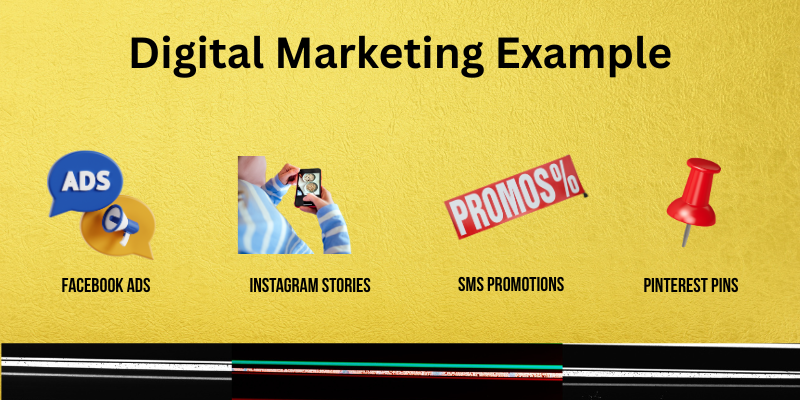
- Facebook Ads
A local coffee shop runs ads on Facebook showing special offers. People nearby see the ads and visit the shop. - Instagram Stories
A small makeup brand posts short Instagram stories showing product demos. Followers see the products in action and make purchases. - Pinterest Pins
A home décor business shares DIY tips and design ideas on Pinterest. Users save and share the pins, increasing brand exposure. - SMS Promotions
A grocery store sends text messages about weekly discounts to customers. This brings more people to the store quickly. - Collaborations with Influencers
A shoe brand partners with a local influencer who posts about the shoes. Fans trust the recommendation and buy the products.
Traditional Marketing Example
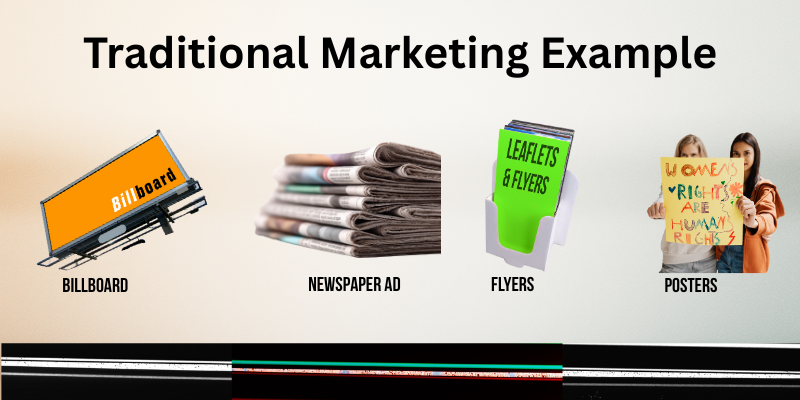
- A shop hangs a big billboard on a busy road to show a new product.
- A company prints flyers and gives them to people in a local market.
- A brand runs a short radio ad during morning shows.
- A store places posters outside schools to promote a sale.
- A business pays for a newspaper ad to reach families in the area.
Pros and Cons Summary
A quick pros and cons view shows how digital and traditional methods work in different ways. Digital options offer wide reach and faster action. Traditional methods give strong local trust and a steady presence. This mix helps with a clean efficiency comparison and clear marketing effectiveness.
Both sides carry benefits and drawbacks that shape the final choice. Digital tools bring speed and easy tracking, while older methods feel more personal. The right plan depends on what the brand needs most. A balanced approach often brings the best results.
Comparing Results and Success Measurement
We can find results in an easy way when digital and traditional marketing are compared. Digital channels offer clear performance tracking, simple ROI checks, and steady conversion rate updates. These details help teams understand what works. They also make engagement metrics easy to read.
Traditional methods use slower but steady success indicators. Brands often look at customer response, local reach, and sales lifts to judge impact. These insights still guide important decisions. But they do not offer fast analytics reports the way digital channels do.
Which Marketing Method is More Cost-Effective
Choosing the more cost-effective method depends on how well the money is used. Digital channels often help with better budget management and lower marketing costs. They also make resource utilization simple because everything stays online. This makes the overall plan easier to control.
Traditional methods use more physical material, which raises the cost. They still work well for local areas but need more money and time. This affects the efficiency evaluation when both methods are compared. In most cases, digital options offer stronger value for the same budget.
Which Marketing Strategy is Better for a Global Audience
Reaching a global audience works better when the message can move across many places with ease. Digital channels support globalization and strong international reach. They also help brands adjust content through simple localization and cultural adaptation. This makes it easy to speak to people with different needs and audience diversity.
Traditional methods work well in one area but struggle with wide market expansion. Print and broadcast ads stay limited to local regions. This reduces their impact when the goal is to reach many countries. For a global plan, digital strategies usually give better results.
The Future of Traditional and Digital Marketing
The future of traditional and digital marketing is shaped by new ideas and changing needs. Digital methods grow fast with artificial intelligence and clear predictive analytics. These tools help brands understand users and plan their next steps with more confidence.
Modern marketing technology also plays a strong role in future growth. It supports smoother work and helps teams move with new future trends. This keeps digital methods fresh, flexible, and ready for new challenges.
Traditional marketing still has a place, especially with the rising focus on sustainability. It blends slowly with online methods and stays useful for local areas. With better marketing adaptability, both styles will continue to shape the marketing world in a balanced way.
Which Type of Marketing Should You Use
Choosing the right type of marketing depends on your business goals and what you want to achieve. A clear view of your marketing objectives helps you see which method fits your plan. Your target audience also shapes the choice, because some people respond better to online content while others trust offline messages.
Your budget size plays a big role too. Digital methods often help when the budget is small, while traditional methods may need more spending. A balanced campaign strategy can also mix both styles when needed. This keeps your message simple and easy to follow.
In the end, the best choice depends on your comfort and long-term decision-making. Look at your goals, your audience, and your money. Pick the method that feels right for your brand and brings steady results.
FAQs – Digital Marketing VS Traditional Marketing
Traditional marketing uses offline methods like TV, radio, and print ads. Digital marketing uses online channels such as social media, email, and websites. Traditional marketing is good for local audiences, while digital marketing can reach people globally. Both types aim to promote businesses effectively.
Effectiveness depends on business goals and target audience. Traditional marketing works well for reaching local customers and older audiences. Digital marketing offers measurable results and precise targeting. Many businesses use both strategies for better marketing performance.
Digital marketing usually fits smaller budgets. Social media campaigns, email marketing, and online ads cost less than TV or print ads. Traditional marketing can be expensive for small businesses. Choosing the right strategy depends on budget size and campaign goals.
Traditional marketing mainly targets local or regional audiences. Digital marketing in the travel industry, eCommerce, or other sectors can reach people worldwide. Businesses use digital channels for global campaigns and wider reach.
Small businesses often benefit from digital marketing. It allows targeting the right audience and tracking results easily. Traditional marketing can be costly and less flexible. Combining both can work, but digital marketing is usually the best start for growth.
Conclusion
This topic gives a clear picture of how digital marketing keeps changing with time. The summary shows that brands now move toward smarter tools and stronger audience connections. These changes shape marketing evolution and open new space for growth.
These insights guide businesses toward a better strategic direction. Companies can use data, content, and customer behavior to improve results. This approach helps them see future opportunities with more confidence.
The growth potential in this field stays high because people spend more time online. Brands that stay active, stay creative, and stay flexible will move ahead. Keep going, folks, and stay tuned for more simple tips that help you grow.

- Be Respectful
- Stay Relevant
- Stay Positive
- True Feedback
- Encourage Discussion
- Avoid Spamming
- No Fake News
- Don't Copy-Paste
- No Personal Attacks
- Be Respectful
- Stay Relevant
- Stay Positive
- True Feedback
- Encourage Discussion
- Avoid Spamming
- No Fake News
- Don't Copy-Paste
- No Personal Attacks
