Pros and Cons of Digital Marketing and What Works in 2026
Published: 16 Nov 2025
Digital marketing means using online platforms to promote products and connect with people. It’s fast, powerful, and shapes how brands grow today. Still, it’s not perfect. There are strengths and weaknesses that every business should know.
Understanding the Pros and Cons of Digital Marketing helps you use it wisely and avoid costly mistakes. This article will walk you through both sides so you can plan your digital strategy with confidence.
I’ve seen many people confused about the advantages and disadvantages of digital marketing, so let’s remove this confusion here.
What Are The Pros and Cons of Digital Marketing
| Pros |
|---|
|
1. Global reach and accessibility 2. Lower cost compared to traditional marketing 3. Trackable and measurable results 4. Personalization and targeted advertising 5. Openness and transparency build trust 6. Social currency through shareable content 7. Improved conversion rates 8. Improves brand loyalty and trust 9. Instant customer feedback 10. Increased engagement with consumers 11. Better market analysis with analytics |
| Cons |
|---|
|
1. Requires skills and training 2. Time-consuming campaigns 3. High competition in digital space 4. Negative feedback can harm reputation 5. Dependence on technology and algorithms 6. Maintenance and ongoing costs 7. Rapid changes in digital trends 8. Vulnerable for cyber threats 9. Short attention span of online users 10. Risk of strategy theft by competitors 11. Understanding what works takes time |
Advantages of Digital Marketing
Digital marketing offers many benefits for businesses of all sizes. It helps reach more people, build stronger relationships, and grow brands faster. With the right strategy, even small businesses can compete with large ones. It’s flexible, measurable, and cost-effective, making it a smart choice in today’s online world. Here are some advantages of digital marketing that show the importance of digital marketing in today’s world.
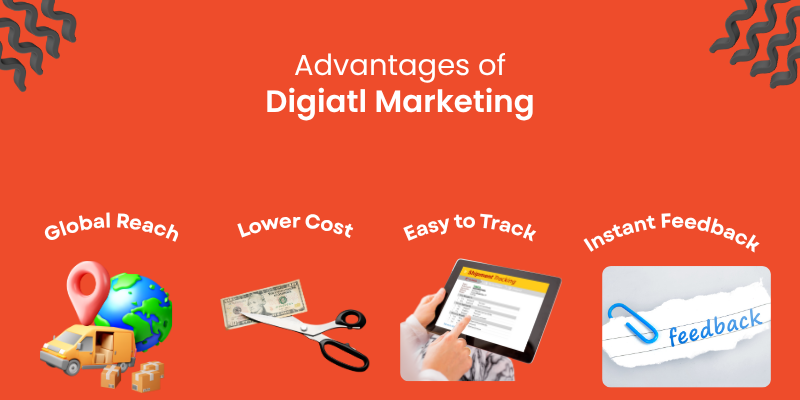
- Global Reach
- Lower Cost
- Easy to Track and Measure Results
- Personalisation
- Openness
- Social Currency
- Improved Conversion Rates
- Improved brand awareness and visibility
- Get Instant Feedback
- Increase Engagement with Consumers
- Improved Market Analysis
1. Global Reach
Digital marketing helps a business connect with people across the world with simple online tools. It makes it easy to show products to new places without extra effort. This reach supports growth and builds trust with a wider audience. It also helps businesses stay active in many markets at the same time.
- Reach customers in many countries
- Share messages with a large audience
- Grow brand visibility across the world
2. Lower Cost
If we compare digital marketing with traditional marketing, it helps businesses promote their products without spending too much money. It gives small teams a fair chance to reach more people. It also keeps budgets under control because every step is easy to track.
- Reduce overall marketing expenses
- Use budget-friendly ads
- Reach more people with low costs
3. Easy to Track and Measure Results
Marketers can check their performance with clear and simple data. You can see clicks, visits, and sales in real time. It helps you understand what works and what needs improvement. The numbers stay easy to read, so you can take quick action.
- See real results with simple data
- Make quick changes based on numbers
- Understand customer actions with ease
4. Personalisation
Personalizing the marketing message becomes one of the top advantages of online marketing. It allows you to show the right message to the right person. It helps you speak directly to users based on their interests. This makes people feel valued and connected to your brand. It also improves results because every message matches the user’s needs.
- Send messages based on user interests
- Build stronger customer relationships
- Increase engagement with targeted content
5. Openness
Digital marketing helps businesses stay clear and open with their audience. People can see reviews, comments, and real feedback at any time. This creates trust because users know what others think. It also helps brands share honest updates and answer questions quickly.
- Build trust through open communication
- Share real feedback with everyone
- Create stronger connections with customers
6. Social Currency
This approach helps people share content that makes them feel smart, stylish, or updated. When users like your posts, they share them with friends, which boosts your brand’s image. The sharing builds a positive reputation and creates quick attention. It also keeps your brand active in daily online talk.
- Encourage users to share your content
- Build a strong and positive brand image
- Increase attention through social sharing
7. Improved Conversion Rates
Online marketing tools help you turn visitors into buyers with clear and focused steps. Simple sign-ups, direct calls to action, and targeted messages push users to take action fast. This approach keeps the journey smooth from the first click to the final purchase. It also helps businesses see steady growth with less effort.
- Guide users smoothly toward action
- Increase sales with targeted messages
- Boost results with simple and clear steps
8. Improved Brand Awareness and Visibility
Online promotion helps more people notice your brand each day. Consistent posts, simple messages, and engaging content keep your name in front of the audience. This steady exposure builds trust and makes your brand easier to remember. It also helps your business stay active in a crowded market.
- Reach more people with regular content
- Build trust through constant visibility
- Stay alive in a competitive space
9. Get Instant Feedback
Digital platforms let you hear from your audience right away. People can comment, react, or message within seconds. This quick response helps you understand what they like and what they ignore. It also supports quick improvements in your content or campaigns.
- Receive quick comments and reactions
- Understand audience needs faster
- Improve your work based on real responses
10. Increase Engagement with Consumers
Attractive content makes you connected with your audience. Simple posts, direct messages, and active conversations keep people involved. This steady interaction builds trust and strengthens your relationship with users. It also encourages them to return and stay loyal to your brand.
- Keep users active through regular interaction
- Build stronger connections with simple communication
- Encourage repeat visits and long-term loyalty
11. Improved Market Analysis
Improved market analysis helps you understand what people want. It shows how customers act on different platforms and what they like to buy. You get a clear view of trends, patterns, and user behavior in simple numbers. This information helps you make smart choices and plan better campaigns. It also gives you the confidence to move in the right direction.
- Helps you track customer behavior with simple data.
- Shows clear trends that guide your marketing steps.
- Helps you make decisions with more confidence.
Disadvantages of Digital Marketing
Digital marketing has many benefits, but it also comes with some drawbacks. It needs time, effort, and constant updates to work well. Many businesses also face problems with competition and changing trends. These issues can make it hard to get steady results.
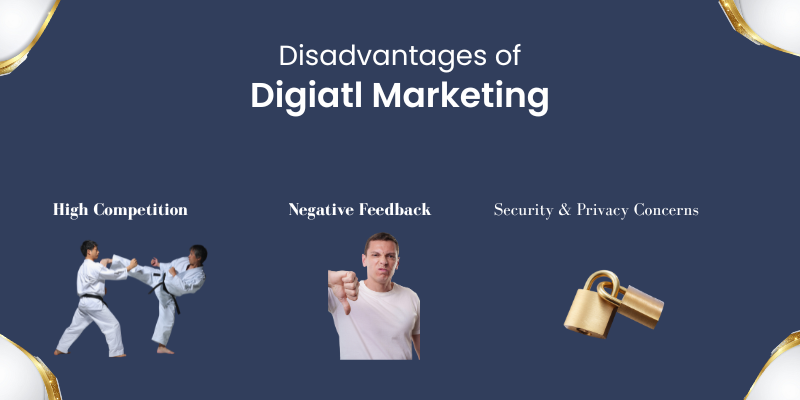
Here is a list of some main drawbacks of digital marketing.
- Skills and Training
- Time-Consuming
- High Competition
- Negative Feedback
- Tech-Dependent
- Maintenance Costs
- Rapid Changes
- Vulnerable to Malicious Activities
- Short Attention Span
- Danger of Strategy Theft
- Understanding What Works Takes Time
- Security and Privacy Concerns
1. Skills and Training
Many people need time to build the right skills. This slows the process and creates stress in daily work. Some tasks feel harder when the team is not trained well. It also leads to simple mistakes that cost time and money. The gap grows bigger when workers do not get steady support.
- Extra time needed to train staff
- Higher chance of mistakes
- Uneven performance across the team
2. Time-Consuming
Some tasks take longer than expected. This slows the whole project and puts pressure on the team. People often feel stuck when simple steps drag on. The delay also affects other tasks waiting in line. Over time, the work feels heavier and less steady.
- Slow progress across key tasks
- Extra pressure on teams
- Delays that affect the full workflow
3. High Competition
Many people fight for the same space. This makes it hard to stand out and keep steady results. You must stay active, or others will move ahead fast. The pressure grows when new players enter with fresh ideas. Over time, the race feels tight and demanding.
- Hard to stand out in a crowded space
- Constant pressure to stay ahead
- New competitors are entering all the time
4. Negative Feedback
Negative feedback can shake a person’s confidence. It feels heavy when many comments point out flaws. Some teams slow down because they fear more bad responses. This also creates tension and lowers the mood at work. Over time, the focus shifts from progress to worry.
- Lower confidence in daily tasks
- Slow work due to fear of mistakes
- Tense atmosphere that hurts performance
5. Tech-Dependent
Many tasks stop when the tech fails. People feel stuck because they cannot move without the tools. This also creates stress when updates or fixes take time. Teams lose their flow, and the work slows to a crawl. Over time, this dependence makes the system feel fragile.
- Work stops when tools break
- Extra stress during tech issues
- Slow progress due to system delays
6. Maintenance Costs
Maintenance costs can put extra pressure on a business. You need money for updates, repairs, and regular system care. These tasks take time and need skilled people. Small teams feel this more because they already work with tight budgets. It also becomes harder when tools grow fast.
- Needs regular money for updates and repairs.
- Takes time and effort from the team.
- Can rise as the system or tools grow.
7. Rapid Changes
Rapid changes make things hard for many businesses. New trends show up fast, and tools shift all the time. Teams need to adjust again and again, which slows their work. This also creates stress because people try to keep up with constant updates. Real-life example: a small shop owner struggles when social media rules change overnight.
- Hard to keep up with new trends.
- Creates pressure on teams and owners.
- Slows work due to constant adjustments.
8. Vulnerable to Malicious Activities
Digital platforms stay open to many bad activities. Hackers try to break into systems and steal data. This creates fear for small and big businesses. Teams spend extra time to keep their systems safe. A simple example is when a small store loses customer data after someone attacks their website.
- Higher risk of data theft or damage.
- Extra pressure to keep systems safe.
- Trust issues when customers feel unsafe.
9. Short Attention Span
People move fast on digital platforms, so they lose interest quickly. They skip content if it feels slow or unclear. This makes it hard for brands to hold their focus. Teams must create simple and sharp messages to keep users engaged. A small shop owner sees this when customers scroll past ads in just one second.
- Users get bored very quickly.
- Harder to keep people focused on one message.
- Brands must use short and clear content to stay visible.
10. Danger of Strategy Theft
Digital spaces make it easy for others to copy ideas. A smart plan can spread fast, and someone may pick it up before you notice. This hurts brands that spend time and money to build their own style. It also creates stress because teams try to stay one step ahead. A small business often sees its ad style or product idea copied by another page within days.
- Others can easily copy marketing ideas.
- Hard to protect unique strategies online.
- Brands lose time and trust when plans get copied.
11. Understanding What Works Takes Time
It takes time to see which digital steps give good results. You need to test different ideas before you find the right one. This can slow progress for small teams that want quick wins. It also creates extra work because you must track each result carefully. A small seller faces this when trying many ad styles before getting steady sales.
- Takes time to test different ideas.
- Slows progress for small teams.
- Needs steady tracking to spot what works.
12. Security and Privacy Concerns
Security and privacy issues create worry for many businesses. Digital tools hold important customer data, so any weak point can cause trouble. Teams must stay alert and protect their systems at all times. This adds extra work and pressure, especially for small groups. A simple example is when a small shop loses customer trust after a minor data leak.
- Risk of data loss or misuse.
- Extra pressure to keep systems protected.
- Customers may lose trust when safety feels weak.
Helpful Tips for Understanding Pros and Cons of Digital Marketing
- Keep your messages short and clear so people notice them quickly.
- Test different ideas to see what works best for your audience.
- Protect your customer data to build trust and avoid problems.
- Watch trends, but don’t follow everything—stick to what fits your brand.
- Respond to customers fast to keep them happy and engaged.
- Learn from mistakes and adjust your plan without getting stressed.
FAQs about Digital Marketing
It helps small businesses reach more people without spending too much money. They can show ads to the right audience and track how well things work. This makes planning easier and faster. The drawback is the strong online competition that can slow growth. It also needs steady time and effort to stay active.
It usually costs less than TV, radio, or print ads. You can start with a small budget and still get good results. You also control how much you spend each day or each week. Traditional methods often need bigger budgets from the start. This makes digital options easier for small brands.
Online platforms change their rules often, and this can hurt results. Companies also deal with high competition, which makes it harder to stand out. Data issues can appear if teams do not handle things carefully. It also takes time to create content and keep it fresh. Without steady work, results can drop fast.
Yes, it helps brands reach people in many countries. Anyone with an internet connection can see the message. But not all places have strong online access. Some people still use older devices or do not trust online ads. These limits can reduce how far the message goes.
These changes can raise or lower reach very fast. A strong post today may get less attention tomorrow. This forces brands to adjust their plan again and again. It also slows growth when the rules shift too often. Staying updated helps, but it takes time and focus.
Conclusion
Understanding the advantages and disadvantages of digital marketing helps people make better choices. We talked about the good points like wide reach and low cost. We also covered the challenges like tough competition and constant changes. Both sides matter because they shape how a business grows online. A smart plan keeps the good strong and controls the issues at the same time.


- Be Respectful
- Stay Relevant
- Stay Positive
- True Feedback
- Encourage Discussion
- Avoid Spamming
- No Fake News
- Don't Copy-Paste
- No Personal Attacks
- Be Respectful
- Stay Relevant
- Stay Positive
- True Feedback
- Encourage Discussion
- Avoid Spamming
- No Fake News
- Don't Copy-Paste
- No Personal Attacks
